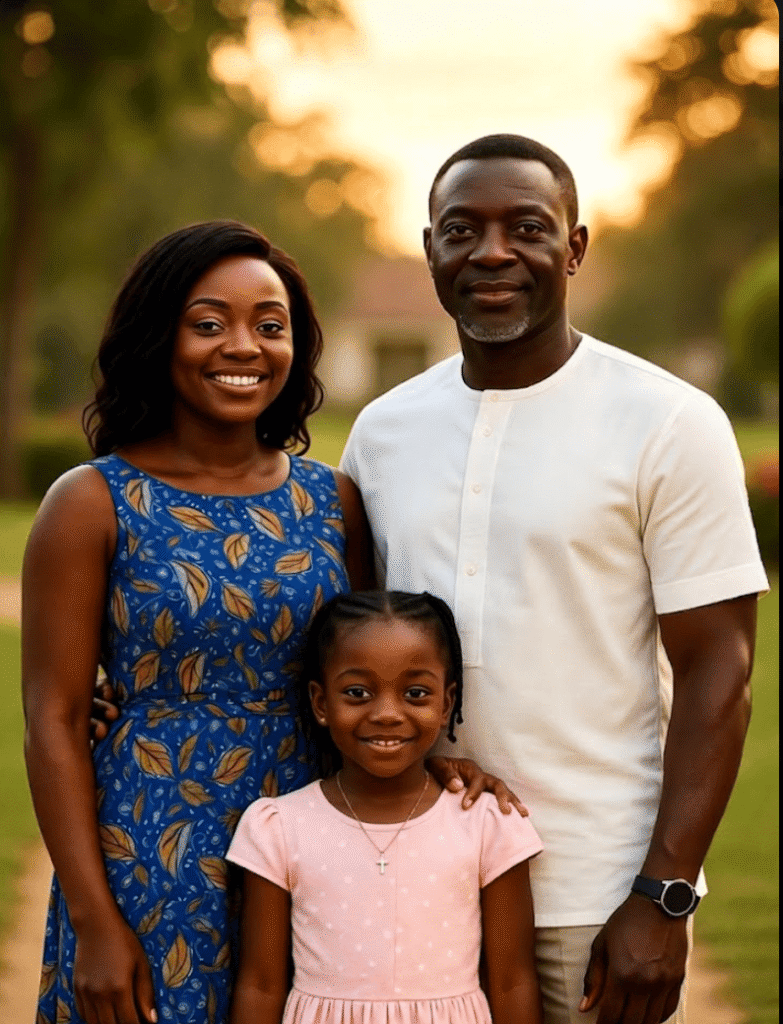
I remember the day Morenike was born like it was yesterday. To my husband and me, she was and in fact still is our bundle of joy. We got married seven years ago and decided to wait two years before trying for kids. When Morenike came, she looked just like me, much to my husband’s feigned disappointment, because He could’ve sworn our first child would have His face. Even though our daughter was almost a replica of me, we began noticing patterns in her behavior that raised many concerns from our family by the time she was a year old.
At 6 months, she was barely making any facial expressions, but we didn’t think much of it. At 9 months, she wasn’t mimicking like my older sister’s children did, and worry slowly began to creep into my heart, but I shrugged it off and carried on. By 12 months, it was clear to everyone that there was a problem, but for some reason, I remained in denial. I mean, I had prayed to God for this child, so I didn’t want to believe in the possibility of my daughter having a condition.
By the time she clocked 2 years, she was already professionally diagnosed with ASD (Autism Spectrum Disorder). At that point, she was consistently unresponsive whenever my mother would call her name, barely made eye contact when playing, kept showing multiple signs of delayed speech, and would react so violently to loud noises, bright lights, and sometimes, even my physical touch.
My heart broke at the doctor’s report, but my husband stood strong, reassuring me that it was a phase and that we’d get through it together as a family.
Initially, it was a lot. I didn’t want to take Morenike to family functions because I didn’t want her to get labelled as the weird kid amongst her cousins, but my mother-in-law insisted that hiding her away from the world wasn’t going to ‘fix’ her, and that she didn’t even need the kind of ‘fixing’ I was hoping for at the time. I remember crying so much while having that conversation with her, but in retrospect, I’m grateful for it.
She opened my eyes to see that the condition I had come to see as a disability was one of the very things that made my Morenike special, and that she needed my love and support more than anyone else in her world. I was done crying and caring what anyone else had to say about her.
Believe me, it was hard and expensive finding a school that could cater to my daughter’s special needs without breaking her esteem, but my family was committed to giving her the best education she deserved. Allow my child to be subject to bullying because she was special? Nope! I wasn’t going to let that happen.
My husband and I are also actively committed to reading books and taking online courses that’d better equip us with the knowledge we need to support her.
Now, our girl is five and thriving! It’s been such a journey, but I’m very grateful for all of it! I’ve learnt that sometimes, what we see as disabilities in people is actually one of the things that makes them very special. I’ve learnt that everyone deserves a fair chance to pursue something in a world that’s too quick to put labels on people, and I hope my daughter’s story teaches you that too…
Featured Image generated using an AI-powered tool