The Things We Learned to Call Madness
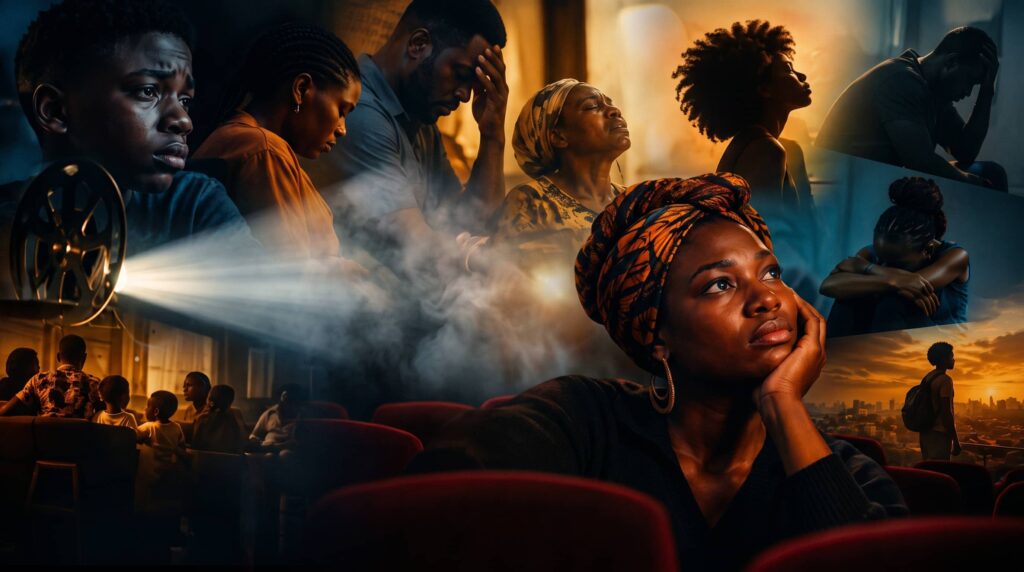
My mother knocks at 2 p.m. “Tomi. Are you sleeping again? At this hour?”
I am not sleeping. I am on my side with my eyes open, watching ants crawl up the wall. My body is a wet sack of cement, and someone has tied it to the bed. I hear her. I open my mouth to answer, but the road between wanting and doing has been washed away.
“Lazy girl,” she says, softer, to the door. “At your age.”
Lazy. That was the first name. I hear it, and the other names come in behind it like relatives at a burial, each one carrying a chair.
Attitude was what my aunty called it the night she asked me something over dinner, and I couldn’t find a face to answer with. I just chewed, staring at the rice. I was holding my face together with both hands from the inside, and she told the whole table, “She has started again.”
Proud was what the woman behind me whispered at Uncle Femi’s burial, while everyone fell on the ground like felled trees and I stood there dry. I had used up my tears in the bathroom, weeks before. She didn’t know that a person can cry until she’s a well in a drought.
Moody. Overthinking. Spiritual attack. The last one came with oil in my eyes and hands on my head and a voice shouting at something inside me, while I knelt there thinking, “What if they’re right? What if there’s a demon, and it’s me?”
Somewhere under the shouting, the question became: what am I? Nobody calls you lazy for one bad afternoon. They call you lazy for being you. By the time the oil ran into my eyes, the names had stopped sounding like names. They sounded like a verdict.
So I stopped bringing anyone anything real. I learned the dialect instead; I’m fine. I laughed half a second early. I said “And you?” before anyone could turn the question around. By evening, my cheeks ached from smiling, and I would sit in the dark with my face in my hands, just to let it rest.
The knock comes again. “Tomi? There’s a screening tonight. Your cousin said you should come.”
I don’t answer. The door stays between us, and I hear her breathing on the other side of it, waiting.
The room is a church hall with the fans off. Plastic chairs. A projector throwing light onto a bedsheet. My mother sits two seats down. My brother, my aunty from the dinner, women from the burial, who are somehow my mother’s friends now. Someone cracks groundnuts too loudly. I sit near the aisle, near the exit, with my shoes on.
The film is titled Tinted Glass. It is about a man no one sees.
His name is Kunle. He is thirty-one, an engineer, the one everyone calls when something breaks. The first scene is a wedding. He is the loudest man there, dancing, spraying money, carrying someone’s grandmother on his shoulders. The camera loves him. Everyone loves him.
The camera follows him out, past the tent, past the drummers, to his car. He sits in the driver’s seat with the door closed and the engine off. The music goes muffled, the way it does behind glass. His hands are on the steering wheel, shaking. He puts his forehead on his hands. Three minutes. Four. Outside, the party glows. Inside, a man is breathing like he’s been running from something for years.
Then someone knocks on the window. He wipes his face with his whole forearm, rolls down the glass, and he is Kunle again, grinning. “Ah, I was just taking a call.”
Next to me, my brother makes a small sound in his throat.
Another scene. Kunle at his mother’s house. She is frying plantain. He is leaning on the counter, and he starts to say something. We see the words rise in him. Then she says, without turning around, “You look tired, my son. Have you been praying?”
The words go back down. He says, “Yes, Mummy.”
“Good. The Lord is faithful. Just be strong; you are the man of the house.”
Be strong. Nobody ever said those words to me. But sitting in the dark, I hear what was underneath every word said to me, and it is the same instruction: Carry it where we can’t see.
Then, 3 a.m. Kunle stands in his kitchen with the fridge door open, its light the only light in the room. His phone is in his hand. He has already typed the message to his best friend.
“Guy, I’m not okay.”
We watch him read it. We watch his thumb hover. We watch him delete it, one letter at a time, and type,
“Wassup, long time. Let’s link.”
Send.
The phone buzzes back almost at once.
“Bro!! Let’s do Saturday!” He stares at the screen; the fridge door swings shut, and he is a shape in the dark, standing very still.
In the last scene, Kunle sits on the edge of his bed with his work shoes on. He lifts his head and looks straight down the lens. His voice is so small it should not carry.
“I am not fine.”
Then, quieter: “And I’m so tired of being the only one who knows.”
The sheet goes dark. Nobody moves.
Then my aunty speaks, to no one, in the dark. “That’s how I talk to my own son. ‘Be strong.’ ‘Have you prayed?’ I say it when I’m afraid of what he might say back.”
My mother says nothing. I hear her breathing instead, thin and careful. It’s the sound she makes outside my door when she has stopped knocking and hasn’t yet walked away.
The lights come on. Every face in the hall looks naked and swollen. I stand up to leave; I have my hand on the chair in front of me. I have already built the sentence, “Good film, Mummy, I’m going to get air.”
“Tomi.”
My mother has not stood up. She looks at her hands, then at me, and her face is one I have never seen. She isn’t afraid of me. She is afraid for me, and she doesn’t hide it.
“Every afternoon,” she says. “When I knocked. When I said lazy.” Her voice cracks down the middle. “Was it like that? Like that man in the car? Were you in there, like that?”
Here is what no one tells you about being seen. It does not feel like relief; it feels like standing in a doorway with your clothes off. Every reflex I own is screaming.
Say you’re fine.
Say it’s just a film.
Say you’re tired.
The sentence is right there in my mouth. I think of Kunle in the dark with his thumb above the screen.
I nod.
The sound that leaves me isn’t a word. It’s been waiting since I was thirteen. It tears out of my chest, and I’m bent double in a plastic chair with groundnut shells under my slippers, and my brother’s arm is around me, and my aunty squats in front of me, saying, “You were drowning, and I called you rude. Tomi, I’m sorry.”
My mother holds my head against her chest like I’m four years old, and says, “I’m here. I knocked and knocked, and I never thought to open the door.”
I say into her dress, “I wanted you to.”
Being seen did not make me new. I am still tired in all the same places. The names are coming loose, like labels in water. Verdicts can be overturned.
My mother hasn’t let go of me. I haven’t asked her to. I used to think being seen meant being found out. It means being found.
Featured Image generated using Gemini

Tabitha O. Olawale
Is a writer and digital content creator passionate about introspection, faith, and storytelling. She explores themes of mental health, spirituality, and unspoken struggles, crafting narratives that inspire reflection and healing. Tabitha has contributed to mental health initiatives and continues to create thought-provoking content that resonates deeply with readers.
Beautiful read! 💜